
Below is a short and simple story in English, then the same story in Finnish, and then again the same in English, but this time with more precise meaning of the Finnish words used. The idea is to provide a glimpse of our traditional worldview by using a bit of etymology.
As some Finnish words used in the story are impossible to translate with just one or two words, I have been forced to be somewhat descriptive in the ”precise meaning” version of the story.
Short glossary is provided at the end.
English
A person went into the wilderness hunting for animals. He knew that nature would provide him with a good catch, if only he gave offerings to the spirit beings managing and guarding the animals. After the hunt he returned home, prepared for himself a sauna, and enjoyed its warmth and steam. The world was good for this human.
Same in Finnish
Henkilö meni erämaahan pyytääkseen eläimiä. Se tiesi saavansa luonnolta hyvän saaliin, jos vain lyylisi emuille. Metsästyksen jälkeen se palasi kotiin, valmisteli itselleen saunan, ja nautti sen löylystä. Maailma oli tälle ihmiselle hyvä.
What we are really saying in the Finnish version
A breathing spirit went to the land of sustenance to ask for living things, as was its share. It knew it was going to get a good allowance from the essence and innate truth of everything, if only it would worship the spirit mothers of living things, and offer them luck. After having done things about the forest it returned to the skin and bark covered dwellings, prepared a warm pit for its shadow soul, and enjoyed its [the pit’s] life force. Ground-air was good for this miracle being.
Below are all of the story’s more important words explained.
Animal
An animal is eläin in Finnish. The word means ”living thing”, something that is alive.
- eläin (noun) = animal
- elää (verb) = to live
- elämä (noun) = life
- elo (noun, verb) = life, an act of living
Animal boss, spirit guardian of species
Spirit guardian of any animal species is called emuu in Finnish. The word has various possible forms, but they all mean ”mother”. Emuu is a type of haltija, meaning a spirit that literally (as the word haltija implies) ”owns” and thus governs any given animal species, also with regards to hunting success by humans.
- emuu = motherly spirit being
- emo = mother
Catch (prey, quarry etc.)
Hunted and succesfully killed game is saalis in Finnish. It means something that has been ”gotten”, with an underlying idea of something that has been ”received”. Can be used for all animals; moose, hare, birds, fish, insects etc.
- saalis (noun) = catch, prey etc.
- saada (verb) = to get, to be allowed
He, she, they, them
Finnish language has no gendered pronouns. The traditional word for he and she in most spoken forms of Finnish is se (plural form ne), meaning ”it”. These days in standardized Finnish hän (he, she) is usually used of people. (The origin of hän has been long debated. It may be Uralic, Indo-European, or from Turkic Altai.)
- se = he, she, it
- ne = they, them, those (things)
Home
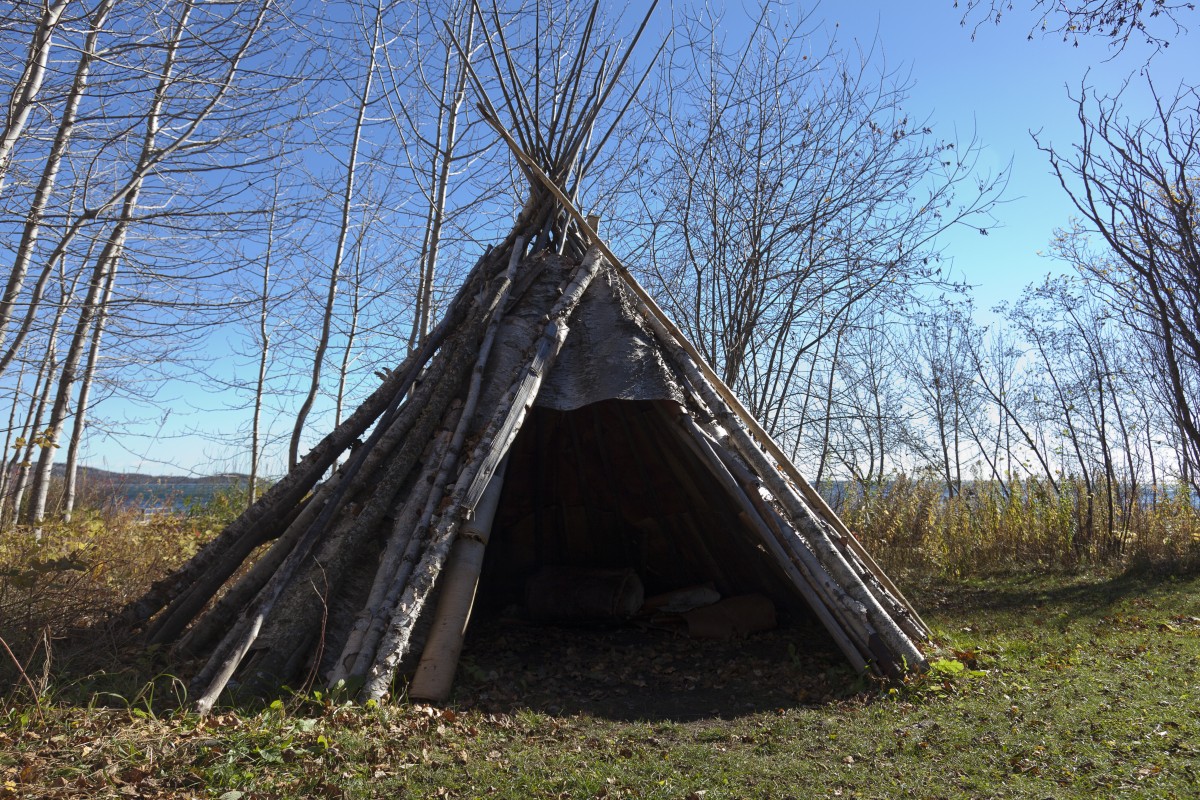
Home in Finnish is koti, which at its root has a plural form of kota, which in turn means a ”conical dwelling” covered with skins or birch bark or cloth. The structure and appearance can be very similar to tipi or certain variety of wigwam in North America, to the lavvu of the Sami people in Lapland, and to the chum of many Uralic peoples like Nenets, Enets, Nganasans, Khanty, Mansi, and Komi in Northern Russia. Kota is usually a temporary structure, but can be more permanent.
- koti = home
- kota = conical dwelling
- kotiin = (to) home, originally ”to the dwellings”
Hunting
Hunting is either metsästys or pyynti in Finnish. The first word means ”doing something that involves the forest”. The second word means ”asking”.
- metsä (noun) = forest
- pyytää (verb) = to ask
- pyynti, pyytäminen = an act of asking
Metsästys describes the location of activity, and in the traditional worldview doing ”a forest type of thing” often means hunting. Similarily, if one ”asks”, they are most likely asking animals from the nature spirits (ie. hunting).
Human
Human being in Finnish is ihminen, which etymologically stems from a concept of ”miracle”. It is also possible that the original meaning is ”guest” or ”strange(r)”.
- ihme (noun) = miracle
- ihminen (noun) = human
Hot steam emanating from sauna stones
The hot steam and heat you get when throwing water on hot stones in sauna is called löyly. The word means ”life” and ”life force”, but most importantly one’s ”body-soul”, or the soul responsible for you heartbeat, blood circulation, breathing, warmth of your body etc. The wisps of breath one sees in cold air is visible löyly. Similarily, sauna-löyly is the seen and felt part of the soul of sauna itself.
- löyly = life force, body-soul, sauna steam
Nature
Nature in Finnish is luonto. It often refers to the natural world, but more importantly, it is the name for one’s soul responsible for charisma, luck, and esoteric abilities. The luonto soul also acts as a guardian against any spirits or harmful forces that are out to get you. With regards to the natural world, luonto holds strong connotations to concepts such as ”natural order of things”, ”true reality of one’s natural surroundings”, and ”spirit-infused and unseen truth of the living environment”.
- luonto = nature, one of our souls
Offering
An offering given to god(s) or spirits is lyyli in Finnish. The verb lyyliä or lyylitellä means ”to worship”, while the noun lyyli can mean ”luck”.
- lyyli = offering, luck,
- lyyliä = to give offerings, to worship
Person, spirit, soul
A person in Finnish is henkilö, which is the same as henki. Both mean ”someone with breath”, but the latter form is used for spirits (nature spirits for example) or a living soul, while the former usually refers to a person these days.
- henkilö = person
- henki = spirit, life force within
- henkäys (noun) = breath
- hengitys = breathing
- hengittää (verb) = to breath
Sauna
Sauna is a Finnish word, used in many parts of the world for a heated room used for physical (and traditionally also spiritual) cleansing. The warmth of sauna is generated by throwing water on hot rocks. Archaic forms of sauna include tent-like saunas, as well as carefully covered holes dug into the ground, in both cases with rocks heated seperately outside and then transferred in. Later on saunas have usually been built with sturdy log frames, with permanent stacks of rocks inside. These stacks of rocks called kiuas are heated in situ. Linguistic studies indicate, that the original meaning of sauna is most likely a ”pit” or ”hole in the ground”.
- sauna = sauna, pit, hole in the ground
Self
Self is itse in Finnish. It means one’s ”person soul”, or the part of your soul where personality stems from. Also called ”shadow soul”.
- itse = self, by your self, person-soul
Wilderness
Wilderness in Finnish is erämaa. Originally it means a ”seperate area of nature (most often forest) that holds one’s share of subsistence, in the form of available game animals, fish etc”. It´s an area that one can rely on, a land of sustenance so to speak.
- erä = portion, share, prey, catch
- maa = land, ground, soil, earth
World
World in Finnish is maailma, which means ”ground-air” or ”land-air”.
- maa = land, ground, soil, earth
- ilma = air
Picture:
Temporary kota dwelling.
CC0 – Creative Commons
Vastaa